
Your metabolism isn’t broken. It is a huge percentage of people who reluctantly shirk it in favor of a few day-to-day fads.
You cut calories. You eat smaller meals. Maybe you even skip dessert.
But the scale barely moves.
It’s frustrating. And slow metabolism is the first thing most people point the finger at.
Your body isn’t burning calories as it should. In the meantime, another individual seems to eat the same food items and does not gain any weight.
This is the blunt truth: the majority lack knowledge of metabolism. It is not your metabolic rate that is normally fractured. Habits, in most cases, are silent but affect the manner in which your body uses energy, fat, and food as fuel.
Minor factors such as sleep, protein intake, muscle mass, and muscle movement play a greater role than meets the eye.
Once you are aware of these factors, it will be much more realistic to boost metabolism naturally.
Signs Your Metabolism is Slower than it Ought to Be
Your body provides some indicators, and at times, you realize you have issues with your metabolic rate.
One indicator is constant fatigue. You wake up tired. Eventually, shortly before afternoon, you are again low on energy. Even simple tasks are tiresome. When the body is not efficiently processing food into energy, energy levels are likely to be low.
The other is the fact that one becomes hungry soon after eating. You are over a meal, and even before the next hour, you are thinking about snacks. This may happen when your diet lacks enough protein, fiber, or other essential nutrients that help stabilize energy levels and support a healthy metabolism.
Next would be the irritating plateaus of weight loss. You begin eating carefully, perhaps exercising more, and then reach a plateau after which you stop losing fat. It is believed that most people believe their metabolism is wrong. Indeed, in the long term, the body is likely to adjust to a calorie-restricted quantity.
Cold affects other people more easily than usual. In an effort to save it, the body can utilize less heat energy.
However, these indications need not signal low metabolism. The daily routines of sleep, the quality of food, and the mass and activity of the muscles influence metabolic well-being in most instances, and this occurs unconsciously.
12 Science-Backed Ways to Boost Your Metabolism Naturally
The process by which the calories you consume are converted into the energy your organism needs to function is known as metabolism, and it is a rather complicated chemical reaction. When your metabolism is more efficient, your body burns extra calories even at rest, helping you manage your weight more easily and keep your energy levels stable throughout the day. Fortunately, you do not need to spend a lot of money on expensive supplements or diets to give your metabolism the boost it needs.
These are 12 scientifically proven methods you can apply in your daily life to accelerate metabolism naturally.
1. Eat More Protein
One of the least considered ways to increase metabolism is to eat more protein.
In fact, protein makes your body strain harder just to be digested than fat or carbohydrates. This is called the thermic effect of food. In simple terms, even the energy it consumes when decomposing protein and transforming it into energy, burns more calories in your body.
It’s not magic. But it helps.
To demonstrate it, think of how you feel after having consumed large quantities of protein versus when you have consumed a sweet. An hour later, you can be hungry after having a plate of cereal. However, an egg, yogurt, or grilled chicken is likely to fill you up much longer. This is because protein helps maintain metabolism and supports hunger control.
Another bonus? Protein helps maintain muscle mass, which supports long-term energy consumption.
You also do not need to consume complicated meals. Simple options work well.
Play around, e.g., in the morning, with eggs, Greek yogurt and fruit, grilled chicken salads, lentils, fish, or snacks of cottage cheese. With minor modifications, it is easier to maintain a healthy metabolism and burn more fat.
2. Build Muscle
The only thing that makes your metabolism rate go up is Muscle.
In a resting state, muscles use up more calories than fatty tissues. In other words, the larger the Muscle, the more energy your body consumes in its day-to-day activities. Not just during workouts.
Many people compare a muscle to a miniature engine operating in the background.
That is why metabolic strength training is so important. Cardio is magnificent for heart health and for burning calories right now. Muscle building, however, helps burn calories even after the exercise is completed.
Neither do you have to remain in the gym.
Simple exercises at an entry level are enough. It would be a good place to begin with body-weight squats, push-ups, lunges, resistance-band exercises, or light dumbbell exercises. Two or three strength sessions per week can support fat loss and metabolic health.
I have seen that most people focus on cardio to lose weight. Nevertheless, cardio combined with strength training is likely more efficient in the long term for calorie burning and metabolism support.
3. Stop Eating Too Little
It sounds logical at first.
Eat much less. Lose weight faster.
Nonetheless, the body does not necessarily work this way.
Crash dieting can even reduce your metabolism. Once the amount of calories consumed is too small, your organism will switch to survival mode. It starts conserving energy and using less during the day.
It means that your metabolic rate varies.
I’ve seen this happen a lot. One minimizes their daily calorie intake – either not eating at all or living on little portions. At first, the scale moves. Then suddenly… nothing. Metabolism ceases, and the blood sugar drops drastically.
It is only fair that your body is on the defensive.
The smarter approach would be to create a small calorie deficit rather than a severe one. Eat a bit less than you burn, but still enough to keep your body well fueled.
Prioritize whole foods rich in healthy fats, fiber, and protein to support steady energy levels and promote a healthier, more efficient metabolism.
In this manner, weight loss may appear to be progressing more slowly, but it is much more sustainable. And thou wilt be glad to thy metabolism.
4. Drink More Water Than You Think You Need
Water is too fundamental to be significant.
Nevertheless, the role of hydration in metabolism is more than one can think.
Your body does not need water for any other metabolic activity. Because the digestive system breaks down food into energy, hydration helps your body burn calories more efficiently. Even a small drop in hydration can reduce your energy, interfere with normal body functions, and potentially slow your metabolism—affecting overall performance.
One peculiarity among those who are making efforts to lose weight has caught my attention. We also tend to think we are hungry when we are a little dehydrated.
The contrast of a glass of water and otherwise.
There are also rumors that the cold water induces metabolism. There’s some truth to it. A small amount of calories that are consumed to heat cold water to body temperature when you enter cold water are burned in your body. There is nothing enormous about it, and it is fat-burning anyway.
A simple habit works best. Take a glass of water in the morning, one before meals, and a bottle by your side all day long.
It’s a small routine. Nonetheless, adequate hydration facilitates metabolism, digestion, and constant energy levels.
5. Don’t Skip Breakfast
Most of them skip Breakfast, thinking it will help them lose weight. Fewer meals, fewer calories… it should be.
But to the greater part of the people, it backfires.
After starving at night, the body becomes hungry. A healthy Breakfast will stabilize energy levels, keep the metabolism up, and prevent excessive hunger throughout the day. When people do not eat Breakfast, they are likely to overeat in the afternoon.
The bigger problem, however, is the typical sweet Breakfast.
Bread toast made with sweet cereals, pastries, or white bread can be delicious; however, it can raise blood sugar levels quickly. Then energy crashes. Hunger returns fast. This is not good for your metabolism.
A smart breakfast is protein-based, fiber-based, and healthy fat-based.
Whole-grain toast bread with brain. Greek yogurt with berries. Nuts and seeds on it, and oatmeal. Even a fruit-and-yogurt smoothie with protein would be okay.
These meals will help you fill up your stomach and your body, helping you burn more energy in the morning. Your metabolism, too, is better performed by being fed on the proper kind of food.
6. Move More Throughout the Day (Not Just During Workouts)
The majority think that the only way to burn calories is through exercise. One exercise of about 30-45 minutes, and that is it for the day.
However, minor movements throughout the day do demand a lot of energy from the body.
Walking around the house, up and down stairs, cleaning, rising, stretching, or even pacing when taking a phone call. These exercises are what are known as NEAT (Non-Exercise Activity Thermogenesis). It is merely the calories you burn outside the gym.
And in truth, this may be of substantial consequence in your metabolic rate.
I have also noticed that individuals who do not exercise much are always on the move throughout the day. They walk more. Move more. Sit less. An individual who spends hours sitting on his life is not burning the energy his body consumes.
Try simple habits. Walk after meals. Take physical breaks during work. Park a little farther away. Use the stairs when possible.
None of them appears like exercises.
They, however, collectively contribute to the maintenance of metabolism, calorie consumption, and the well-being of metabolism in a highly natural way.
7. Take Coffee or Green tea (Moderately)
The day cannot really start without coffee for most people.
And the good news? The morning routine can actually work for you.
Caffeine is a natural stimulant that is able to temporarily increase the metabolism rate so that the body can burn a few extra calories. It may also help to increase concentration and boost your energy so that you are able to be active and productive throughout the day.
This has not been the case in green tea. It is caffeinated, though, and it also contains good antioxidants, catechins. These substances facilitate, i.e., the body is better able to use fat as an energy source.
But moderation matters.
Three or four cups of creamy, sweet coffee will not do your metabolism any good. Overload of caffeine will also disrupt sleep, thereby raising metabolism.
A better approach is simple. A cup of coffee, or two of black or green tea, preferably in the morning. Suppose it is a small metabolism stimulant, and not a magic fat-burner.
8. Improve Your Sleep Quality
One of the least known aspects of metabolic health is the role of sleep. People are focused on nutrition and training and lose their idea of sleep.
That will slow you down, incidentally, to a crawling pace, even more than you think.
Ghrelin and leptin are hormones that regulate feelings of fullness and hunger, and they work in different ways. Ghrelin increases hunger. Leptin decreases the feeling of satiety.
The result? The next day, you get hungry, and you will develop a desire for food that is rich in calories.
I’ve noticed this myself. It is now more challenging to make healthy decisions when they fail to get enough sleep at night. Energy is low, motivation is waning, and snacks are quite tempting.
The insulin sensitivity, which determines how your body uses and stores energy, is also affected by sleep deprivation.
It does not require any complex tricks to help one get better sleep. Effort to maintain normal wakefulness, avoid television before bed, and avoid caffeine at night.
This and other basic habits are good for the body because they help an individual heal more quickly and maintain a better metabolism in the long run.
9. Eat Spicy Foods Occasionally
To the lovers of spicy food, the following is a reward. It can give your metabolism a minor boost.
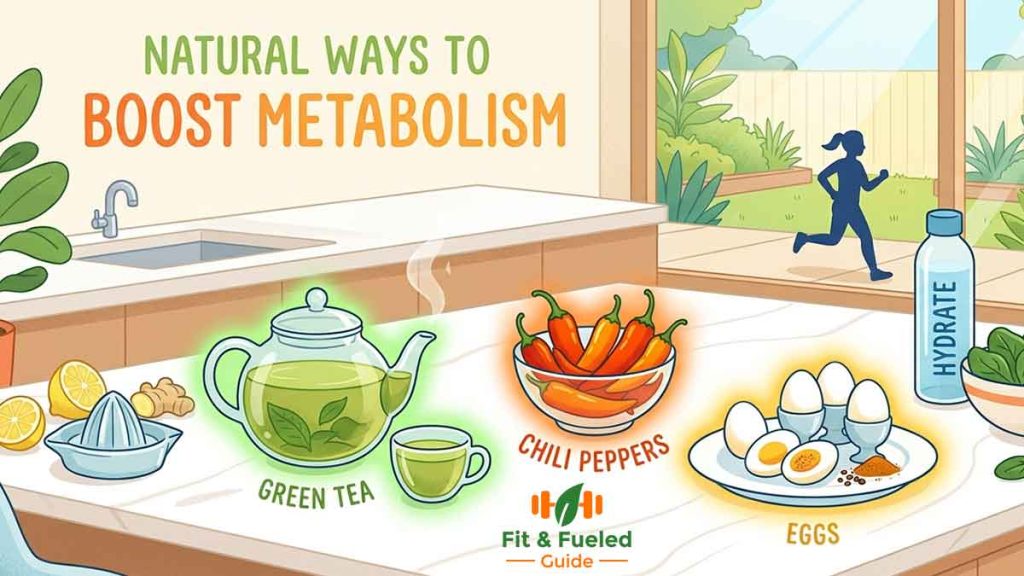
This is due to a substance called capsaicin, found in chili peppers. Capsaicin can trigger thermogenesis, i.e., your body produces more heat and burns a few more calories.
And that is why when you eat a hot meal, you can sweat.
But let’s be realistic. Spicy food is no magic secret for fat burning. Eating a bowl of chili isn’t going to reverse metabolic rates overnight.
Still, it can help a little.
For example, sprinkling the eggs with chili flakes, adding hot peppers to the stir-fries, or even drizzling the grilled chicken with a slice of hot sauce would increase calorie burning slightly, not to mention that the foods themselves would be more satisfying. And, people can adopt healthier diets through delicious food.
The key is balance.
When you are fond of spicy foods, then put them in moderation. Just do not rely on them as the most important way to enhance metabolism. Take it to be a small, precious reward.
10. Manage Stress Before It Manages Your Body
Stress does not just affect your mood. It can also have an insidious impact on your metabolism.
You are always tense, and your body produces a hormone called cortisol. There is normal cortisol in low concentrations. But when stress becomes a habit, high levels of cortisol can slow metabolic well-being and make you more prone to weight gain.
This is especially in the belly area.
It is one of the trends that you might have succeeded in. A stressful week at work. Poor sleep. Lust towards sweets or comfort foods. And it is not only a question of will; it is also about your hormones.
It is also capable of lowering the energy levels caused by chronic stress, which means one moves less throughout the day. Calorie burning decreases with reduced daily activity.
The good news is that stress management doesn’t have to be complicated.
Even the simplest routines are not as bad as one thinks. A short walk outside. Taking several minutes of deep breaths, listening to music, and even smashing the windows and having a rest.
Such short pauses will allow the body to rest and rejuvenate. In the long run, stress will be minimized, leading to a healthier metabolic rate and better balance.
11. Try High-Intensity Interval Training (HIIT)
Extensive exercise does not save time for all people. And, really, you do not necessarily want them.
High-intensity interval training (HIIT) is the best way to benefit your metabolism and calorie burning in less time.
The idea is simple. Bout of vigorous work, followed by some intervals of rest. When the exercise is slow and steady, your heart rate is slow and steady, and your body works less than when it is a quick, hard exercise.
An interesting fact about HIIT is the afterburn effect. After you have completed a tough interval workout, your body still burns more calories even after the workout. This is commonly known as increased caloric expenditure after exercise.
Complex exercises are also unnecessary for you.
A lesson on introduction may look like the one presented below:
Jumping jacks, fast, 30 seconds, and rest, 30 seconds. Next, squats using body weight, rest, and maybe mountain climbers.
This process has to be repeated every 10-15 minutes.
It’s short. But effective. Such exercises can help reduce fat and increase metabolism over time.
12. Eat Regularly Instead of Skipping Meals
It is believed that one of the easiest ways to lose weight is to skip meals. But it often backfires.
The time between meals can be very long and lead to fluctuations in blood sugar. You are alright one minute, then the next minute you are so starved and need something sweet or something to mend the engine. This will reduce metabolic efficiency, making weight and energy levels difficult to control.
I’ve seen it many times. One of the friends leaves lunch so that he can save on calories, only to get to the snack drawer by mid-afternoon. The organism goes into survival mode, and energy is stored not only easily but also as fat.
Frequent meals are a way to stabilize the energy level, as well as promote a more active metabolism. The large food portions that occur many hours between are not necessary; small, balanced meals or snacks that contain protein, fiber, and good fats are better. Consider yogurt and fruit, or a half-dozen nuts, or whole-grain toast and eggs.
This day-to-day activity keeps your metabolism on average and prevents overeating in the days to come. From a broader perspective, it is very easy to maintain weight by doing the same things: feeding your body and keeping your metabolism running well.
Frequently Asked Questions
Can Certain Foods Naturally Boost Your Energy and Activity Levels?
Yes some foods can help your body burn calories and improve energy. Foods high in protein spicy foods like chili peppers and green tea rich in antioxidants can give your metabolism a boost.These foods can support your energy and activity. They are not a fast solution.
The best results come from eating a diet exercising regularly and living a healthy lifestyle to keep your metabolism working well with foods like protein-rich meals spicy ingredients, like chili peppers and antioxidant-packed green tea.You need to combine them for results.
When is the time to be more metabolically efficient?
It varies. The habit of changing —like working on the muscles, taking enough protein, being active, and getting enough sleep —can start showing results within a few weeks—consistency, not quick fixes.
Are the supplements for metabolism effective?
Most supplements promise a lot, yet deliver little. Coffee or green tea extracts can be used as a minor temporary stimulus to replace adequate nutrition, exercise, and sleep. Focus on the habits that make a difference for your metabolism.
Is a slow metabolism genetic?
It is somehow related to genetics; however, on most occasions, it does not provide the fuel. Of much greater concern are the effects of muscle mass, activity level, diet, and sleep habits on whether you gain or lose weight and on how many calories you burn.
Final Thoughts
And when your body seems not to be able to lose the calories, cling to your rag firmer. Your metabolism isn’t broken. Most of the time, it is only through the influence of everyday activities: sleep, movement, food, and stress.
Neither is it a fad diet nor some magic pill. It consists of little, ordinary additions. All this counts and contributes to sufficient water consumption, balanced meals containing protein, physical activity throughout the day, and sufficient rest.
These little habits, in the long run, turn out to be an excellent way to maintain a healthy metabolism rate compared to drastic measures.
Take it to be the compound interest. One walk, one nutritious meal, one sleep, and no issues–they cannot appear to be that much simultaneously. Nevertheless, the results can be realized within a few weeks or months.
There is no need to become demotivated whenever making progress is slow. It does not matter how perfect, but rather how comfortable. Note the establishment of habits that will not displease your life.
It would not hurt you to take care, but instead, your body would react to it. Be pragmatic about the starting point, believe in the process, and you will gain more energy, improve your metabolism, and enjoy a healthy, natural well-being. Every minor habit would make you a healthier and stronger individual.